Tired but Wired: Why Your Brain Won't Shut Off at Night
2026-05-06 · 4 min read

It is 11:30 PM. Your body gave up an hour ago. Your eyes sting, your limbs are heavy, and you know exactly how tomorrow feels when tonight goes badly.
And your mind is running a staff meeting.
If that sounds familiar, you are not broken and you are not alone. Sleep researchers have a name for this state, and they understand it well enough to explain why it happens and what helps. This article walks through the science in plain language, because nobody should need a neuroscience degree at midnight.
"Tired but wired" is a real, measurable state
Feeling sleepy and falling asleep are not the same thing. Sleepiness is chemical pressure: a compound called adenosine builds up in your brain across the day, and by night the pressure is real. That part of the system is usually working fine. You really are tired.
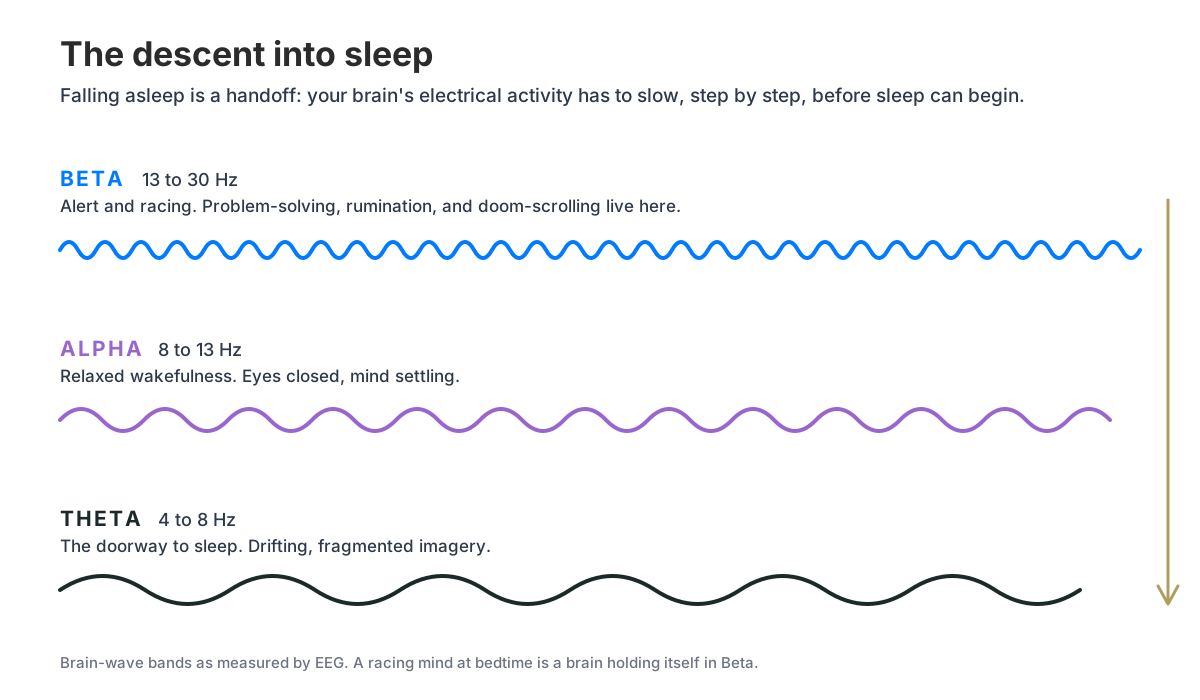
Falling asleep is a separate step. Your brain has to power down its monitoring station, a structure called the thalamus, and let its electrical activity slow from fast, alert Beta waves down through calmer states. When your mind is churning through tomorrow's meeting, an awkward conversation, or a problem you cannot solve from bed, that handoff never happens. The brain reads goal-directed thinking as a signal that the environment is unsettled, so it keeps the gates open.
That is the mismatch behind tired but wired: high sleep pressure and a brain that refuses to stand down. It is not a character flaw. It is a traffic jam between two systems.
The 9:30 PM second wind is supposed to happen
Here is a detail that surprises most people. Sleep scientists, including Matthew Walker and researchers at Harvard, describe a brief peak in alertness that arrives one to two hours before your natural sleep time.
In evolutionary terms it made sense: a late burst of energy helped our ancestors get back somewhere safe before dark. In modern terms it means that around 9:30 or 10:00 PM you may suddenly feel awake, capable, even productive.
The trap is misreading it. That second wind feels like proof that you are not tired yet, so you open the laptop or the feed and ride the wave. But it is a transient blip, not a verdict.
Knowing this changes the move: when the second wind hits, treat it as a signal that sleep is close, not far away.
Stress runs the loop in the wrong direction
Cortisol, your main stress hormone, is supposed to reach its lowest point of the day at bedtime. Rumination keeps it elevated, and elevated cortisol blocks the calm, parasympathetic shift your body needs to fall asleep: heart rate easing down, blood pressure dropping, core temperature falling by two to three degrees Fahrenheit.
It gets worse with chronic stress. Researchers studying burnout describe a flipped cortisol rhythm: a blunted peak in the morning, which feels like fog, and a failed shut-off at night, which feels like being wired at 11 PM despite running on fumes. If your days feel like mornings underwater and nights on high alert, that pattern has a name, and it is a stress pattern, not a sleep skill you lack.
Why the usual advice falls short
"Just relax" misunderstands the problem. For a racing mind, the evidence favors what researchers call cognitive displacement: giving the brain something else to hold, rather than trying to hold nothing.
A blank, quiet room hands the microphone straight back to your to-do list. Filling your attention with something calm, low-stakes, and unimportant occupies just enough of your working memory that the rumination loses its grip. That is the mechanism behind techniques like cognitive shuffling and behind purpose-built sleep audio, and we cover it in detail in What Actually Quiets Racing Thoughts.
A few other moves are well supported:
- Dim the lights in the hour before bed. Bright light delays melatonin, the hormone that opens the door to sleep.
- Keep a consistent schedule. Walker's phrase is that regularity is king. Same wind-down, same time, every night, teaches your circadian clock when to expect the handoff.
- Write the list down. Researchers studying high-stress professionals recommend a short brain dump on paper before bed, so your brain can stop holding the worry-space open.
- Cool the room. Your core temperature has to drop for sleep onset. A cooler bedroom works with that, not against it.
The honest fine print
Two things worth saying plainly.
First, if your sleeplessness happens three or more nights a week and has lasted three months or more, that pattern may be clinical insomnia, and the gold-standard treatment is cognitive behavioral therapy for insomnia (CBT-i) with a healthcare professional. Articles and apps are sleep hygiene tools. They help the tired but wired state; they do not treat a clinical condition.
Second, none of this works instantly. Wind-down habits build through conditioning, and researchers put the timeline at two to four weeks of consistency before the deeper benefits arrive.
Your brain is not malfunctioning. It is doing exactly what a vigilant brain does, at exactly the wrong time. The fix is not force. It is giving it a quieter job.
References
Walker, M. (2017). Why We Sleep: Unlocking the Power of Sleep and Dreams. Scribner. Covers the pre-bedtime alertness peak, sleep regularity, and the mechanics of sleep onset.
Beaudoin, L. P. (2014). A design-based approach to sleep-onset and insomnia: super-somnolent mentation, the cognitive shuffle and serial diverse imagining. Paper presented at the 36th Annual Conference of the Cognitive Science Society, Quebec City.
This article is for general information and relaxation purposes only. It is not medical advice and is not intended to diagnose, treat, cure, or prevent any condition, including sleep disorders. If you have an ongoing sleep problem, please talk to a healthcare professional.
Give your mind somewhere calm to go
Somonic turns lights-out into something to look forward to: sleep stories built around what you choose, with soundscapes and music made for drifting off.
